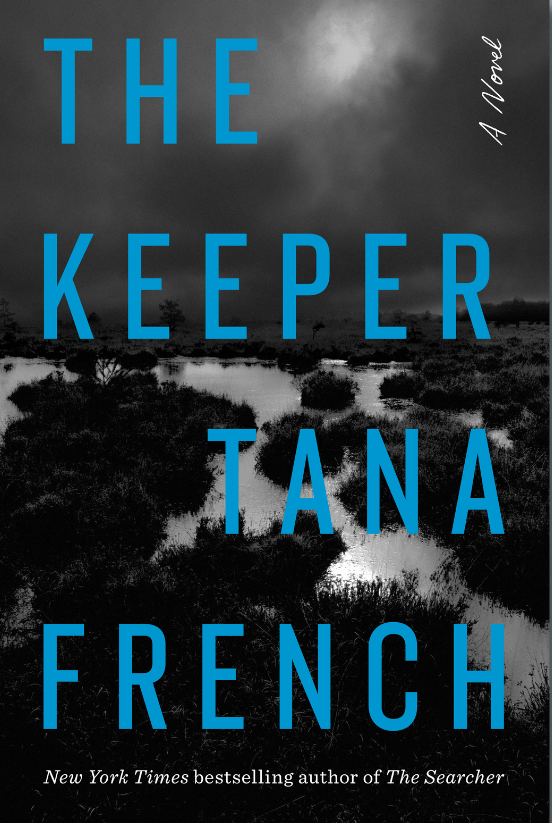
Set in a quaint Irish village, The Keeper follows The Searcher and The Hunter, and solidifies the crime series’ status as a contemporary classic.

Go to Source
Author: Maureen Corrigan

All about Men and the women who love them!
Set in a quaint Irish village, The Keeper follows The Searcher and The Hunter, and solidifies the crime series’ status as a contemporary classic.
Go to Source
Author: Maureen Corrigan
The Trump era has brought a resurgence of the “alpha male.” New Yorker writer Charles Bethea reports on camps where men crawl through mud and sit in ice baths in an effort to reclaim masculinity.
Go to Source
Author: Tonya Mosley
Sharing a roundup of my favorite reputable health and fitness certifications if you’re considering becoming a wellness professional. Check out all of the details below!
Hi friends! How are you? I hope that you’re having an amazing week so far! Mine is PACKED with client calls and podcast interviews, but I’m looking forward to a long, relaxing Easter weekend with the fam.
For today’s post, I wanted to talk a bit about health and wellness certifications, especially now that I’m working my way through two new ones: High Performance Health and Integrative Health Practitioner Level 3.
I LOVE to learn, and over the past 17 years in the wellness industry, I’ve completed quite a few health and fitness certifications. I won’t recap them all again here (they’re all on the About page!), but I definitely have some favorites. 
I figured I’d share my top certification options if you’re considering expanding your knowledge in the health and wellness space, teaching fitness, or pursuing a new career.
Whether you want to coach clients, teach classes, dive into functional health, or simply deepen your own knowledge, there are so many incredible programs out there.

One of the biggest questions I get is: Where do I even start?
The answer really depends on your goals.
Do you want to:
Work 1:1 with clients?
Teach fitness classes?
Build an online wellness business?
Or simply learn more for yourself and your family?
I’ve broken this down into a few categories to help you find the best fit.
If you want to help clients get to the root cause of health imbalances, functional lab testing is the BIGGEST gamechanger.
When you can run labs, analyze them, and recommend appropriate protocols, it’s such an incredible way to serve clients on a deeper level.
(Friendly reminder that we don’t diagnose, prescribe, cure, or treat. We’re looking for deficiencies and toxicities—and how we can support the body back into balance.)
This is by far my favorite certification.
I’ve completed Level 1 and Level 2, and I’m currently working through High Performance Health and Level 3. I’m not exaggerating when I say that IHP has completely changed my life.
It’s enabled me to help clients in a much deeper capacity, and I’ve also used the testing and protocols on myself and in our family. It was a huge part of my own healing journey.
What I love most about IHP:
It combines Eastern and Western approaches
You learn how to read and interpret functional lab testing
You’re given clear protocols you can actually implement
It’s extremely practical and actionable
If you’re interested in working with clients, running labs, or truly understanding root-cause health, this is the one I recommend again and again.
You can check it out here and use the code FITNESSISTA for a huge discount.

I don’t personally hold this certification, but I have many friends who have completed it and gone on to build thriving online practices.
From what I understand, it’s similar to IHP in that you’re learning how to become a “health detective” and look at patterns within the body using functional labs.
The curriculum and testing options are fairly similar, and the goal is the same: helping clients get to the root cause of what they’re experiencing instead of just managing symptoms. You can check out details here.

Please note that this is SO different from a Registered Dietitian.
Only a licensed RD can tell you exactly what to eat or prescribe a specific diet plan. A nutrition coach can provide guidance, education, macro support, and balanced recommendations based on your goals, but cannot prescribe individualized medical nutrition therapy.
I do not hold this certification, but it’s one that I seriously considered.
One of the biggest perks is that you can specialize based on your interests, whether that’s plant-based nutrition, Paleo, hormone health, or other dietary approaches.
It’s a great option if you’re looking for a broad, holistic introduction to health coaching and want flexibility in how you apply it.
I completed Precision Nutrition a handful of years ago and thought the curriculum was very straightforward and practical.
What I liked most:
Learning how to calculate macros based on individual goals
Understanding nutrient timing and fueling strategies
Diving deeper into specific goals like endurance training or fat loss
Coaching strategies and behavior change
This is a great option if you want a strong foundation in nutrition coaching, especially if your focus is fitness, body composition, or performance. You can learn more here.
I’m currently working through this certification and LOVING it.
It covers topics like:
optimizing cardio capacity
brain health and cognitive function
advanced nutrition strategies
biohacking tools and stacks
taking an already healthy routine to the next level
This is a great option if you’re already in the wellness space and want to go deeper into optimization and performance. Learn more about HPH here.

Little blast from the past from the Zumba days. Bring it baaaack!
If you want to work in a gym, train clients, or teach classes, a fitness certification is essential.
I’ve been a NASM-certified personal trainer for many years, and I really appreciated how in-depth and science-based the curriculum is.
It covers:
anatomy and physiology
program design
injury prevention
client assessment
I also have to maintain continuing education credits and CPR certification to stay current, which I think is so important.
This certification truly took my personal training to the next level.
This is the group fitness certification I got years and years ago, and it’s the one I’d recommend if you’re considering teaching group fitness.
It focuses on:
class structure
cueing and coaching
safety and modifications
creating an engaging experience
If you love the energy of group classes, this is a great place to start.
If you want to niche down or expand your offerings, specialty certifications can be a great addition.
Some of the ones I’ve completed:
NASM Corrective Exercise
NASM Women’s Fitness Specialist
NASM Weight Loss Specialist
BODYPUMP
These allow you to:
work with specific populations
address injuries or imbalances
create more customized programs
If you’re interested in teaching yoga, a Registered Yoga Teacher (RYT) certification is the standard.
Beyond teaching, it’s also an incredible personal development experience that deepens your understanding of movement, breath, and mindfulness. Your local yoga studio will likely offer 200 hour certification programs. Get certified at the studio you love!
Barre is a little different because there aren’t as many widely accepted universal certifications.
If you’re interested in teaching barre, I recommend reaching out to the specific studio where you’d like to teach. Many studios offer in-house training programs.
The best thing you can do is take as many classes there as possible, since each studio tends to have its own unique method and style.
If I could give one piece of advice, it would be this:
Start with something that genuinely excites you.
You don’t have to do everything at once. You don’t need 10 certifications to get started!
One certification can open the door, and you can build from there.
For me, continuing education has been one of the most rewarding parts of this career. It’s allowed me to grow, evolve, and serve others in a much deeper way.
If you’re thinking about diving into the wellness space, I’m cheering you on and if you have any questions about these certifications, I’m always happy to help!
xo
The post Best Health and Fitness Certifications (My Favorites After 17+ Years in the Industry) appeared first on The Fitnessista.
Go to Source
Author: Fitnessista
From JFK Jr.’s favorite NYC hotspots to his distinct style being embraced by fashionistas, what was once embraced by the George magazine founder in the Nineties is having yet another cultural moment, his trusted Timex watch very much included.
On the heels of the series finale of the massively popular yet occasionally controversial Ryan Murphy series Love Story: John F. Kennedy, Jr. & Carolyn Bessette, Timex strikes while the iron is hot yet again, delivering its second reissue of the Timex 1995 Intrepid in a nod to “America’s Prince.”
The iconic American watchmaker worked with timepiece platform Dimepiece on an August 2025 reimagining of the adventure timepiece, which the nautically-inclined JFK Jr. took to wearing in both more leisurely fashion and with a charcoal suit. For her part, fashion publicist Bessette went the more minimal route with a wardrobe featuring the likes of Prada and Jil Sander (the look these days is certainly en vogue in the West Village and other haunts favored by the duo).

The prep-tinged sport watch joined JFK Jr.’s menswear lexicon of backwards ballcaps, Kangol hats, chunky loafers and devil-may-care suiting worn to great effect, a style move celebrated by Timex once again. “The reissue stays very close to the 1995 original,” Timex Group Chief Marketing Officer Shari Fabiani told InsideHook.”We focused on preserving the proportions, construction and defining features that made the watch distinctive in the first place.” In this instance, that means retooling the watch with a new rubber strap in a nod to the way the Kennedy son wore his own version of the Intrepid.

With an Indiglo button positioned in decidedly ’90s teal at 9-o’clock, the case is further complemented by minimal hits of teal on the bezel. Timex also calls out its eye-catching 4-o’clock crown placement and a “substantial” 46 mm case size. Billed as a “modern-day reissue of a dive-inspired timepiece from the ‘90s,”the watchmaker notes the watch was among many accessories “favored by a certain ’90s icon who knew a thing or two about leading with style.”

The latest Timex Intrepid Reissue sticks with the classics in terms of bold dive watch proportions, while the August 2025 Timex x Dimepiece Intrepid offering swerved in more gender-neutral fashion with a 36mm case design (and an overall look that sold out quite quickly). Available now for pre-order online at Timex and priced more than fairly at $219, it appears the latest Timex reissue arrives in time to celebrate a style icon and meet the moment for nautical summer adventures aplenty (if you can get your hands on one, that is).
Go to Source
Author: Beau Hayhoe
Go to Source
Author: Emily Menez

Brendon Babenzien, the former creative director of both J.Crew Men’s and streetwear juggernaut Supreme, leverages heritage prep style in the first Converse collaboration with his menswear brand, Noah.
Babenzien previously upgraded J.Crew’s profile amongst menswear enthusiasts by re-introducing buzzy products such as “Giant-fit” Chinos and opening dedicated J.Crew men’s concept stores. The New York City-based designer and his wife, Estelle Bailey-Babenzien, launched Noah ten years ago and are celebrating their company’s first decade with plaid and quad-panel takes on the classic Chuck 70.

The limited-edition Chucks utilize the same kind of classic collegiate patterns that might adorn your favorite J.Crew button-downs. The Chuck 70 Ox ($110) is rendered in a plaid blue cotton twill that could easily pair with an oxford shirt or varsity jacket, while the Chuck 70 Hi ($120) has a distinctive quad-panel washed canvas in a color-blocked blue, olive and red. Both models swap varnished foxing tape for a more relaxed matte finish and feature details like a co-branded license plate and a “Player’s Name” print on the tongue liner.

The sneakers are the latest releases from Noah, which “has long stood at the intersection of skate, surf, and music, blending rebellious creativity with the refinement of classic menswear,” according to a statement by the brand best known for its Japanese selvedge denim, rugby shirts and reliably cool suiting.

“The relationship between Converse and Noah goes back to the very beginning—from day one of the brand,” Babenzien added in his own statement. “We are proud to say that Converse is now back in our lives again in our 10th year. It is a testament to their commitment to creative ideas and an acknowledgment of the timeless style that Converse embodies.”

Just as Noah follows a stated mission of responsible environmental production, its Converse collection recycles preppie-chic to seriously stylish effect. The Chuck 70 Ox and Chuck 70 Hi are available now at Noah and converse.com.
Go to Source
Author: Chris Wilson

Speculative reports that the Rolex GMT-Master II “Pepsi” is on its way out are having a very real effect on the aftermarket luxury watch market. The iconic collector-grade watch—featuring a duo-tone bezel in blue and red, mirroring the hues of the popular soda can—has registered a jump of about $3,000 in price since the start of 2026, climbing from the just above $20,000 at its lowest to well above $23,000 as of late March.
Bloomberg first reported the spike using data accumulated by the outlet’s Subdial Watch Index, which tracks prices based on multiple listings for the 50 most-traded watch models. As the GMT-Master II Pepsi’s price has climbed, the number of active listings tracked by Subdial has dropped by about 25 percent. Industry journal WatchPro previously reported that Rolex Authorized Dealers were informed that they’d receive no further deliveries of the Pepsi colorway,
Subsequent speculation has emerged from Reddit watch forums and insiders like Paul Altieri, CEO of luxury resale site Bob’s Watches. “The GMT-Master II ‘Pepsi’ has been one of the defining modern Rolex sports watches,” he told Maxim. “Rolex has discontinued it before and brought it back, so nothing is ever final, but when a steel Pepsi comes off the catalog, buyers notice.”
The original Rolex GMT-Master Pepsi was born of a 1954 partnership with Pan American World Airways to help pilots track multiple time zones—red indicated daytime, blue nighttime. That bezel was first fabricated from fragile Bakelite, but the Swiss brand switched to anodized aluminum in 1959. The “Pepsi” designation officially moved into the GMT-Master II era in 1982, introducing an independent hour hand that allowed travelers to monitor a third time zone by rotating the bezel. After a hiatus during the early ceramic years, the iconic colorway returned in 2014 in 18-karat white gold before the 2018 release of the Reference 126710BLRO brought the stainless steel Pepsi back to the permanent collection on a Jubilee bracelet.
According to Bloomberg, the Pepsi speculation is also boosting demand for previous models including the “Coke” GMT-Master II, which Rolex officially stopped producing in 2007. The model with a red-and-black bezel was replaced by the ceramic bezel GMT-Master II line. Other discontinued variants include the all-black “Lunette Noir” (discontinued in 2019), and the “Clint Eastwood,” the first of brown-and-gold “root beer” colorways, which debuted in the 1970s and was worn by the famed actor in a few movies throughout the 1980s and early 1990s.
As for the Pepsi, the best approach is obvious: Buy it while you still can.
Go to Source
Author: Brandon Friederich
Brooks Nader wants to bring back the “party girl” era of supermodels epitomized by nineties sirens like the legendary Kate Moss.
“Some people might hate this, but I just can’t with all the girls with the Carolyn Bessette thing in New York,” Brooks told Page Six Style of the late fashionista’s minimalist aesthetic, adding that she found Ryan Murphy’s Love Story series, which tells the story of Bessette and JFK Jr., “amazing.”
“I am like Kate Moss: fur, boobs out, cigarette,” she adds. “Party girls are back!”
Whether she’s posing for Maxim and the Sports Illustrated Swimsuit Issue or strolling around New York City wearing nothing but bubbles, the Love Thy Nader star is known for her skin-baring style moves. “Even if I’m not feeling that great in my body, somehow still getting naked, I’m like, ‘I kind of like this,’” Brooks added.

So it’s only natural that the soon-to-beBaywatch star and her sisters—Mary Holland, Sarah Jane and Grace Ann—are all starring in a new “naked ambition”-themed campaign for body care brand Jukebox.

Nader added that she and her Hulu reality-star sisters have been ready for the spotlight since they grew up in small-town Louisiana. “We were so fortunate to grow up in a house where we were all together,” Brooks told Page Six Style.

“We were just always running around naked around the house. I think that that never left our spirit because I’ve definitely got into some trouble … I have naked ambitions!” she joked.
Go to Source
Author: Frank Tanner
You’ve heard it time and time again: “A new car loses half its value the moment you drive it off the lot.” That’s an exaggeration, but like all good adages, it conveys a truth: Because of assured depreciation, the purchase of a new car is always a flex and never an investment. But if you want to flex from a fiscally responsible position, certain models are holding their value exceptionally well right now.
Automotive search engine iSeeCars analyzed nearly 1 million 5-year-old used vehicles sold from March 2025 to February 2026 and calculated their depreciation. The findings show that today, cars from 2020 and 2021 model years resell for 58.2 percent of their original sticker price on average—a 3.8 percentage-point gain over 2025.
“This recent reduction in 5-year depreciation rates suggests rising used car demand and/or insufficient supply over the past 12 months,” iSeeCars executive analyst Karl Brauer said of the 41.8 percent average depreciation, per Road & Track. “We’re not back to pandemic levels, but with used cars retaining more value in every major vehicle segment, there’s clearly been a shift in overall used car value. Likely factors include ongoing new car price hikes and drops in consumer confidence, both of which are driving more used car demand.”
While pure EVs and full-size luxury SUVs are the highest depreciators—the Nissan Leaf and Infiniti QX80 are trading for just 36.9 percent and 37.2 percent of their original MSRP—the Porsche 718 and Porsche 911 are arguably the best new cars to buy from a value-retention perspective. More wise sports car purchases include the Chevrolet Corvette, Subaru BRZ, and the Toyota Supra, while others on this list seem to earn their keep through reputations for reliability. Check out the top 10 lowest depreciators below, and head to iSeeCars for the full breakdown.


Go to Source
Author: Brandon Friederich
Go to Source
Author: Jesse Eisenberg