As a fashion editor who happens to be plus-size, I have a particularly great idea about where to shop for cute size-inclusive clothes. Since Fall is here in full force and the winter holiday season is right around the corner, I’ve been itching to find some cute styles that fit the bill. If you’re like me, then you’ve landed in the perfect place. I’m here to divulge my latest plus-size findings just for your shopping pleasure.
Personally, browsing through Anthropologie regularly is a must. You’re sure to find some on-trend style moments, and my latest picks echo just that. Ahead, I’ve detailed a handful of some seriously cute plus-size fashion finds from Anthropologie’s latest arrivals. In the mix are cozy, cold-weather-friendly picks, festive finds, and style-forward pieces. Keep scrolling to uncover your soon-to-be favorite Anthropologie finds below.
Best Plus-Size Anthropologie New Arrivals
Anthropologie
Sunday in Brooklyn Liquid Shine Bubble Hem Midi Dress
So beautiful.
Anthropologie
Maeve Marnie Taffeta Tapered Pants
The taffeta pants trend has finally made it to plus-sizes.
Anthropologie
Maeve Fringed High Rise Ankle Length Pants
These festive fringe pants are perfect for a cute holiday look.
Anthropologie
By Anthropologie Blake Skinny Woven Belt
The brown and black leather options are my favorite.
Anthropologie
Maeve Velvet Knit Twofer Top
I love the layered top look.
Tt Studios
Billie Denim Jacket
A little cinched waist never hurt anybody.
Anthropologie
Pilcro Izzie Cropped Mid-Rise Barrel-Leg Pants
Perfect everyday pants.
Anthropologie
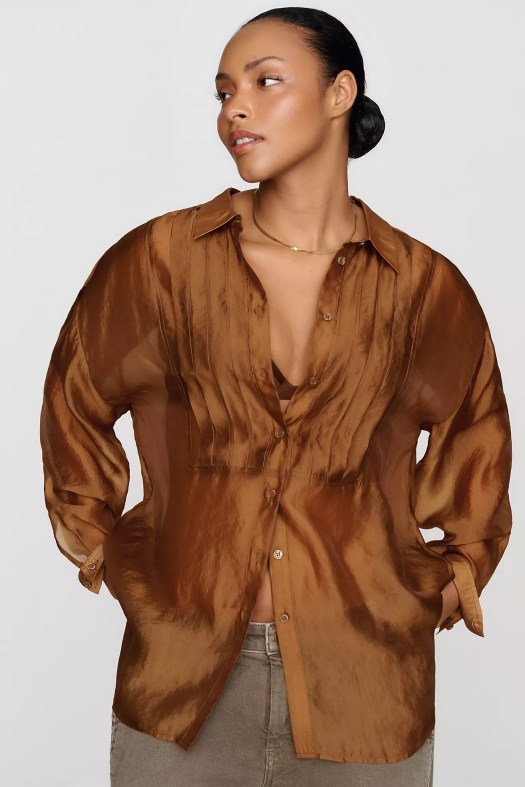
By Anthropologie Sheer Satin Tuxedo Blouse
Stunning fabric.
Anthropologie
Maeve Jamie Velvet Halter Top
I’m into this gorgeous top.
Anthropologie
By Anthropologie Chainmail Mirrored Sequined Top
A statement piece that’ll garner you endless compliments.
Anthropologie
@loverlygrey X Anthropologie Shrunken Bennet Buttondown Shirt
Sparkly embellishments for the holidays is a must.
Anthropologie
Maeve Sequined Stretch Knit Cardigan
Cute.
Anthropologie
By Anthropologie Reverie Lace Trim Tapered Pants
I have these pants, and I need them in a few more color ways.
Anthropologie
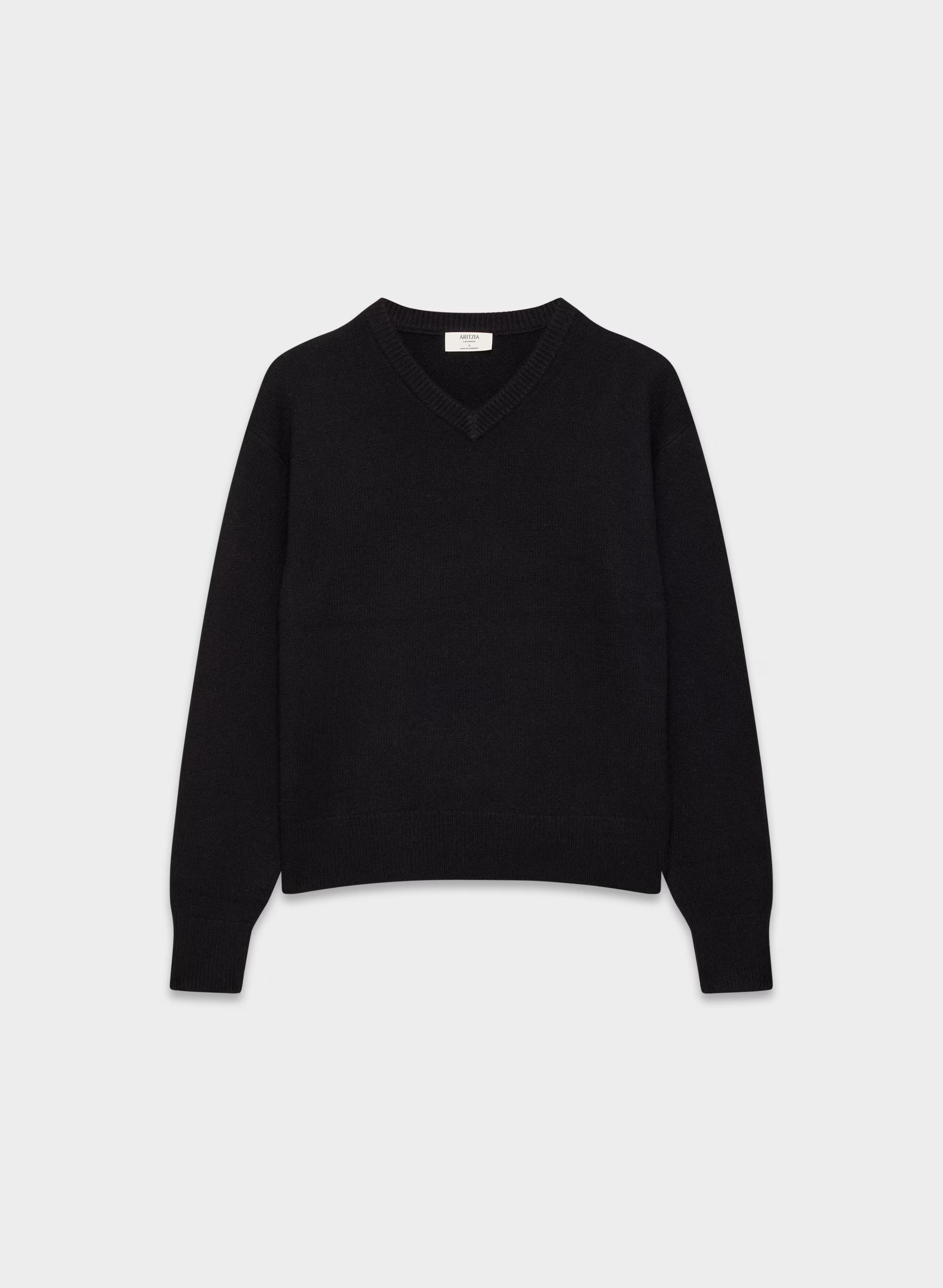
Pilcro Astrid Wool Blend Mock Neck Sweater
There’s no such thing as enough sweaters for fall and winter.
Anthropologie
Maeve Carys Mock Neck Pullover Sweater
I’m partial to a good set of stripes.
Anthropologie
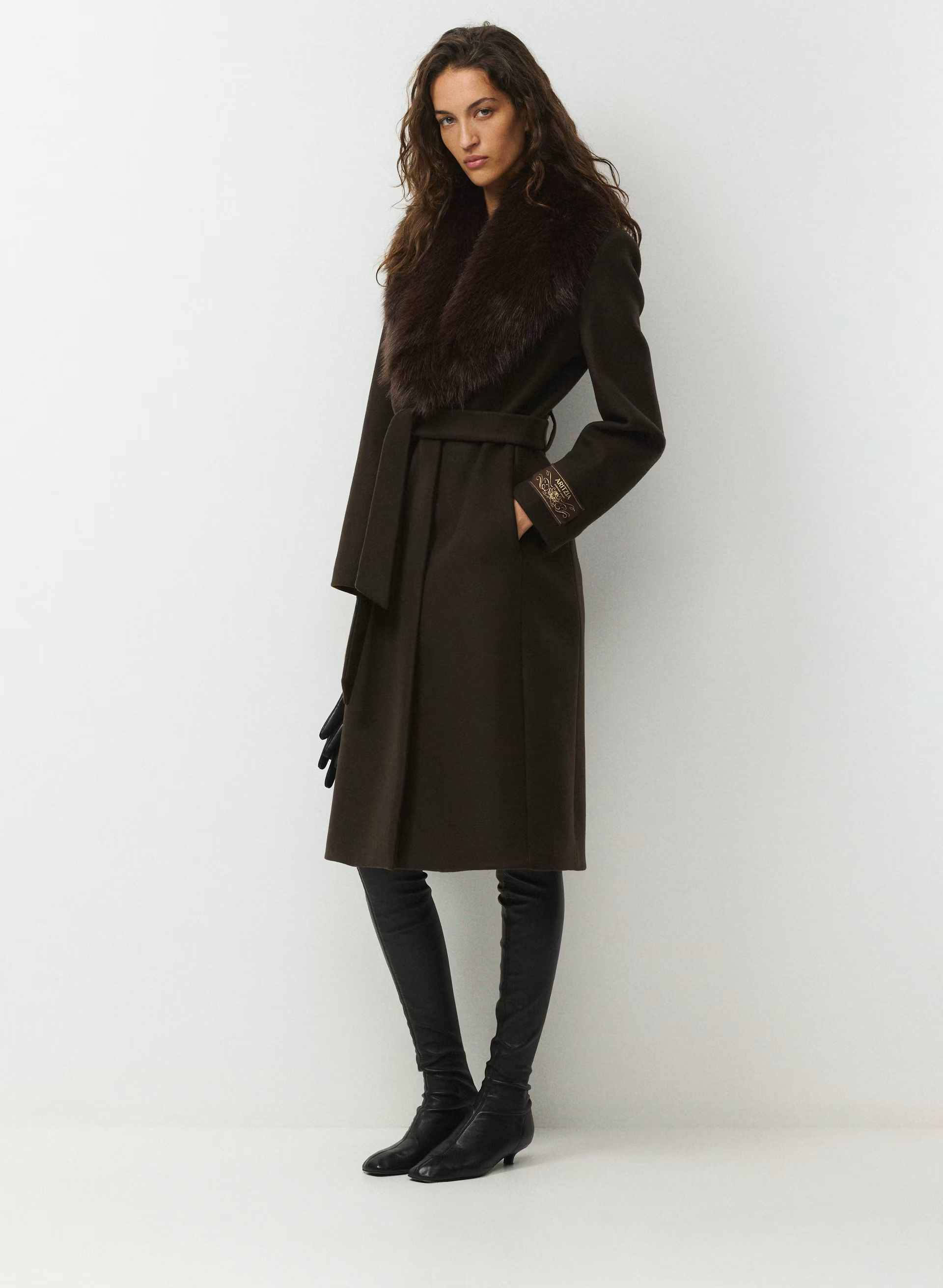
Maeve Wool Blend Balmacaan Coat
One chic winter coat coming right up!
Anthropologie
By Anthropologie Moira Funnel Neck Utility Jacket
Funnel-neck jackets give off major cool-girl vibes.
Lately, I’ve favored low-lift outfit formulas, say, a sweater-and-jeans or blazer-and-trousers. With temperatures dropping and nights growing longer, I prefer to sleep in, save time in the morning, and limit the number of decisions I need to make. My outfit being one of them. Enter Scandinavian style. From Stockholm to Oslo, it’s a masterclass in minimal dressing.
The limited color palette, dedication to quiet luxury, appreciation for layering, and obvious love for color blocking make for wonderful outfit inspiration. Scroll on to see which effortless Scandi trends I’ll be participating in this winter.
Parisian women wore it this fall, but Scandi women are making a case for it this winter. And by “it,” I mean the column skirt. It’s a shortcut to looking polished and put-together no matter the occasion.
Nothing looks more low-effort than a satin drawstring pouch. Walking countless runways at Fashion Week, this soft-bodied clutch is the epitome of effortlessly chic. For one, it can’t hold much; its use signals ease and minimal responsibility. Just you, a lip liner, and a pouchette against the world.
Shop the trend:
LE SUNDIAL
Lee Tasseled Velvet Shoulder Bag
MANGO
Satin Cord Pouch
HUNTING SEASON
The Lola Drawstring Tasseled Cord-Trimmed Satin Bucket Bag
If there’s one thing to take away from Scandinavian style, it’s the expert use of texture. A prime example: the fringe shawl. This poncho-like silhouette drapes over jeans or a dress, making it stylish and versatile.
With a pair of Calzedonia tights and a high-vamp pump, a knee-length skirt makes a chic, Scandi-inspired winter outfit. Bonus points if it features a retro print.
Nineties minimalism never goes out of style, which is why I love it. I prefer to buy items that stand the test of time rather than fleeting trends to make my money go the furthest, as they tend to offer the best cost-per-wear—it’s always easy and chic. Designers like Helmut Lang, Jil Sander, and Calvin Klein defined the era, and now labels like The Row and Toteme are known for the aesthetic as well.
While scrolling on Nordstrom, I noticed the retailer had a new curated edit titled “’90s Archival Work.” In it, there are a variety of pieces from brands like COS, Reformation, and Mango, alongside a few investment items such as Tom Ford sunglasses and Khaite‘s beloved Danielle High-Waist Straight-Leg Jeans.
Other highlights include classic fall staples such as button-downs, straight-leg jeans, capris, loafers, slingback pumps, and cashmere-lined leather gloves—some of which can be worn year-round. Shop the best of the edit ahead.
Ray-Ban
53mm Pillow Oval Sunglasses
It’s hard not to think of oval sunglasses when you think of ’90s minimalism.
As a fashion editor, It’s my job to pay attention to what the most stylish among us are wearing, buying, or talking about. Since fall has officially arrived, I’ve been inundated with some seriously great shoe shopping inspiration. If you ask me, it’s the perfect time to stock up on cool footwear to refresh your collection and your favorite looks. If you’re looking to shop stylish shoes for fall, you’ve come to the right place. I’ve detailed the exact trends fashion people are wearing for fall and beyond below.
Yes, you read that correctly. I’ve taken out the guesswork in deciding on what cute shoes are on-trend and worth buying. Some trends included in the mix are ballet pumps, jewel tones, and animal print. Keep scrolling to discover all the trends and exactly where you can shop them.
Animal Print
Animal print has been having a huge moment in the last year. While leopard is a classic, we’ve shifted into prints like Zebra, Tiger, or Calf hair printed with abstract dots.
Reformation
Calista Flat
Margaux
The Brera Mule – Tan Zebra Haircalf
MANGO
Zebra Print Leather and Fur High-Heeled Shoe | Mango Usa
Jewel Tones
Deep rich, vibrant jewel tones are providing major pops of color this fall and winter.
ZARA
Suede Kitten Heels – Blue – 5
ASOS DESIGN
Lilibelle Premium Hair on Real Leather Ballets in Purple
Charlotte Stone
Poppie Block Heel Pump
DOLCEVITA
Camla Velvet Heels Bordeaux Velvet
Tall Boots
These are a classic, but this year you can expect chic iterations with pointed or squared toes and a less blocky but still supportive heel.
DOLCEVITA
Alima Boots Black Leather
J.Crew
Sylvie Knee-High Boots in Eel-Embossed Leather
Nine West
Somas Knee High Boot
FRANKIE4
Evie Leather Knee High Boot
Ballet Pump
The easiest way to get that ballet flat look and slightly elevate it is to add a little heel.
MARGAUX
The Ada Pumps
Tony Bianco
Maddi Block Heel Pump
Sam Edelman
Rosa Pump
Penny Loafers
Out with the chunky soles and in with a classic, sleek penny loafer.
Steve Madden
Ronie Leather Loafer
Reformation
Francine Ruched Loafer
MANGO
Luisa Penny Loafer
Vagabond Shoemakers
Brandi Loafer
Slippers
Dreamy slides and slip on shoes styles reminiscent of an easy, comfy slipper are become more and more elegant.
Every year around the time I begin to swap my sandals for boots and dresses for sweaters, trying to figure out how to make more space before bringing my big winter coats in. I’ve done more cleanouts than I can count, lately it feels like every weekend if the time to get organized yet somehow the “maybe” pile always ends up right back on the shelf.
So this year, I went to the pros. I asked professional organizers Lisa S. Jacobs,Stephanie Vainer, and Shaniece Jones, plus stylist Liz Teich, how they decide what makes the cut. Their answers surprised me. None of them want you to pull everything out at once, and three of the four think the “if you haven’t worn it in a year, get rid of it” rule needs to go. Below, they cover the biggest mistakes, the categories people hold on to for too long, what to do with the pieces you’re ready to part with, and the one product that makes a closet easier to manage.
What are the biggest signs that it’s time to let go of an item in your closet?
The biggest sign that it’s time to let go of something in your closet is when it no longer serves a purpose in your life. If an item no longer fits, feels uncomfortable, doesn’t reflect your personal style, or hasn’t been worn in years, it may be time to part ways. I always encourage clients to be honest about what they actually wear versus what they’re holding onto “just in case.” Your closet should reflect your current lifestyle and be filled with pieces you genuinely love, wear, and feel-good in.
What are the most common mistakes you see people make when cleaning out their closets?
One of the most common mistakes I see is people holding onto clothing they’re saving for a rainy day. Another is jumping straight into organizing without properly editing first. I always emphasize the importance of taking inventory of what you own and thoroughly editing before implementing organizational solutions. There’s no point in beautifully organizing a closet full of things you no longer wear or need!
How do you decide whether an item is worth keeping if you haven’t worn it in a long time?
I always encourage clients to ask themselves why they haven’t worn an item and whether they can realistically see themselves wearing it again. Does it still fit, reflect their personal style, and serve a purpose in their wardrobe? Of course, timeless investment pieces, sentimental items, and special occasion clothing are exceptions worth considering. Ultimately, if you can’t envision yourself wearing something again, it’s probably time to let it go.
What are the biggest misconceptions you wish people would stop believing?
One of the biggest misconceptions is that a successful closet cleanout means getting rid of as much as possible. It’s not about how much you eliminate, but about making thoughtful decisions about what deserves a place in your wardrobe. Another myth is that you need a large, luxurious walk-in closet to be organized. With the right systems in place, even the smallest closets can be functional, beautifully organized, and easy to maintain.
What items or wardrobe categories do people tend to hold on to for too long?
I often see clients holding onto an excessive number of basics, like old T-shirts, sweaters, and jeans, as well as shoes they no longer wear. People tend to accumulate multiples of these items, even when they consistently reach for the same few favorites. Holding onto more than you actually need only creates unnecessary clutter and makes it harder to see and access the pieces you love.
What wardrobe staples are worth replacing once they’ve become worn out, and what can typically be repaired or tailored instead?
Everyday essentials like T-shirts, undergarments, and frequently worn basics are worth replacing once they’ve lost their shape, become stretched out, or show significant wear. On the other hand, quality investment pieces like blazers, coats, and leather goods can often be given new life through alterations or repairs. I always encourage clients to consider the quality, condition, and longevity of an item before deciding whether to replace it. A well-maintained wardrobe is just as important as a well-organized one!
What’s your advice for someone who feels overwhelmed by the idea of cleaning out their entire closet?
You don’t have to tackle your entire closet at once! I always encourage clients to start small and focus on one category at a time, whether it’s shoes, coats, or sweaters. Another great approach is to edit your wardrobe seasonally, reassessing what you own as you transition from one season to the next. Breaking the process into smaller, manageable steps makes it feel far less overwhelming and helps you maintain an organized closet year-round.
What should people do with the pieces they’re ready to part with, and how can they make more thoughtful decisions about donating, reselling, or recycling them?
Clothing that’s still in good condition can be donated to local charities or organizations, while designer pieces and higher-value items may be worth reselling or consigning. The goal is to give items a second life whenever possible rather than simply throwing everything away.
If someone wanted to order just one item that would make their closet easier to manage, what would you suggest?
One of my favorite closet organization tricks is using baby hangers for jeans and pants! They’re smaller than traditional hangers, which helps maximize closet space while keeping everything neat, visible, and easily accessible. It’s such a simple, inexpensive swap that can make a big difference in how your closet looks and functions.
What are the biggest signs that it’s time to let go of an item in your closet?
For me, the biggest sign is when I can’t keep up with the laundry anymore! 😂 When clothes are constantly piling up, drawers won’t close, and putting clean laundry away feels like a chore because there’s simply nowhere for it to go, that’s usually my sign that it’s time for a closet cleanout.
Other signs? You’re wearing the same handful of outfits even though your closet is packed, you can’t find what you’re looking for, or getting dressed every morning feels more stressful than it should.
But I think the hardest part of decluttering is actually letting things go, and I struggle with this too! We attach so much emotion to our belongings, whether it’s the money we spent, the memories attached to them, or the person we used to be.
There’s something so freeing about finally letting go of things that no longer serve you. You genuinely feel lighter! And when you stand back and see all your hard work, it’s such a rewarding feeling.
I always say, the goal isn’t to own less. It’s to make your home easier to live in.
What are the most common mistakes you see people make when cleaning out their closets?
Trying to do everything at once! I see this all the time. People get motivated, pull everything out of their closets, and suddenly they’re sitting in the middle of a mountain of clothes wondering why they even started.
Then they get overwhelmed, run out of time, and everything ends up right back where it started.
I always tell my clients and community to start small. One drawer, one shelf, or even just one category of clothing. Give yourself a little win! That feeling of accomplishment is what motivates you to keep going.
Another mistake is buying organizers before decluttering. You can have the prettiest organizing system in the world, but if you’re just organizing things you don’t actually need or want, you’re not solving the problem. You’re probably just putting off the harder part of the process.
How do you decide whether an item is worth keeping if you haven’t worn it in a long time?
I’ve spent the last seven years helping people declutter, organize, and make the most of small spaces. And one thing I’ve learned is that the hardest part of decluttering usually isn’t deciding what to keep. It’s understanding why we’re holding on to things in the first place.
I’ve seen organizing advice from people with walk-in closets practically the size of our first house! But when you’re working with limited space, you have to be a little more intentional about what deserves a place in your home.
Instead of following the usual rule of getting rid of anything you haven’t worn in six months, I like to ask myself, “Why am I still holding on to this?”
Honestly, sometimes cleaning out your closet feels more like a therapy session than an organizing project! We attach so much emotion to our belongings, and I think it’s important to recognize that. Am I keeping this because I genuinely love it? Or because I spent too much money on it? Does it remind me of a different time in my life? Am I holding on to it because I hope it’ll fit again someday?
I don’t believe you should get rid of something simply because you haven’t worn it recently. But I do think you need to be honest with yourself about why you’re keeping it.
There’s a big difference between holding on to something because it brings you joy and holding on to something because you feel guilty letting it go.
What are the biggest closet-cleanout myths you wish people would stop believing?
That you need to become a minimalist to have an organized home!
I love clothes, I love shopping, and I love beautiful things. I don’t believe you need to give all of that up to be organized.
I also don’t believe everyone needs a capsule wardrobe or some magic number of pieces in their closet.
To me, organizing isn’t about owning as little as possible. It’s about making the space you have work for the life you actually live RIGHT NOW.
What items or wardrobe categories do people tend to hold on to for too long?
Oh, definitely the “someday” clothes! 😂
The jeans we’re hoping will fit again, the dress we spent too much money on but never wear, or the shoes that look beautiful but are so uncomfortable we avoid putting them on.
I also think people hold on to a lot of duplicates without realizing it. We all have those five nearly identical sweaters, but somehow we reach for the same one every time.
I always encourage people to pay attention to their favourites. The things you consistently reach for tell you so much about what you actually enjoy wearing. Let the rest go to a new home where they’ll be loved and used.
What wardrobe staples are worth replacing once they’ve become worn out, and what can typically be repaired or tailored instead?
I’m a big believer in taking care of the things you already own.
Good-quality coats, denim, blazers, and dresses can often be repaired or tailored. Sometimes something as simple as replacing a button, fixing a zipper, or having a pair of pants hemmed can give a piece a whole new life.
But everyday basics like socks, underwear, and T-shirts that have completely lost their shape are usually worth replacing when they’re no longer comfortable or functional.
I think it’s important to remember that decluttering doesn’t always mean throwing things away and buying new ones. Sometimes it’s about appreciating and taking better care of what you already have.
What’s your advice for someone who feels overwhelmed by the idea of cleaning out their entire closet?
Do NOT clean out your entire closet! Seriously.
One of the biggest things I’ve learned over the years is that you don’t need an entire weekend or a perfectly organized home to feel accomplished.
Set a timer for 20 minutes and pick one small area. Maybe it’s your sock drawer, your sweaters, or just the clothes hanging on one side of your closet.
Finish that one thing, enjoy the feeling of having accomplished it, and come back tomorrow.
I think people underestimate how much progress they can make in 20 minutes a day. Those little wins add up, and before you know it, your entire closet feels different.
Which is exactly why I launched our Substack! It’s designed to give people the guidance, motivation, and manageable daily tasks they need to declutter and organize their entire home in just 20 minutes a day over the course of a year.
What should people do with the pieces they’re ready to part with, and how can they make more thoughtful decisions about donating, reselling, or recycling them?
I always encourage people to think about where their things are going next.
If something is in great condition and has resale value, selling it is a great option. But I also remind people to be realistic about how much time and effort they want to put into selling things.
For clothing that’s still wearable, I love the idea of donating locally, especially to organizations that can get those items directly into the hands of people who need them. Facebook Marketplace and local Facebook groups are also great places to give things away to someone who can use them.
And for anything that’s no longer wearable or repairable, look into textile recycling options in your area.
But here’s something I see all the time: people declutter their closets and then leave bags of donations sitting in their bedrooms, hallways, or cars for months!
The job isn’t finished until those things have actually left your home. Make a plan for where they’re going before you even start.
If someone wanted to order just one item that would make their closet easier to manage, what would you suggest?
Honestly, slim, non-slip hangers!
They’re such a simple change, but especially in a small closet, they can make a huge difference. They help maximize hanging space, keep clothing from slipping off, and make everything look so much more cohesive and, in turn, more organized.
Don’t forget to hang your clothes by category and then by colour. That alone can do wonders for how your closet looks and feels. There’s something so calming about opening a closet and actually being able to see what you own!
I’ve always believed that you don’t necessarily need more storage. Sometimes you just need to make better use of the space you already have.
And of course, my biggest piece of advice is to declutter before you buy any organizing products. Figure out what you actually need to store first and save your closet measurements in your phone.
What are the biggest signs that it’s time to let go of an item in your closet?
The biggest signs that it’s time to let go of an item are not what most people think, which is that it’s time to let go when something is worn out or has holes. And I don’t fully subscribe to “if you haven’t worn it in a year, it has to go.” The real sign is when an item no longer aligns with your lifestyle, your style, or who you are today. Or when it carries emotional weight that keeps you stuck in a moment you’ve already outgrown.
I studied biology, and the longer I’ve done this work with closets, the more I’ve come to see the closet not as storage but as an environment that shapes how we think, feel, and live. My core belief is that the closet is the most overlooked space in the home, yet it carries the most psychological weight. Every morning you open those doors and get a message about who you were, who you think you should be, or who you are now. If a piece is speaking to a version of you that no longer exists, that’s your sign to let it go.
What are the most common mistakes you see people make when cleaning out their closets?
The biggest mistake is starting on impulse with no plan. Maybe a social media post sparked it, or a friend just did theirs. People also tend to repeat what they did at their last cleanout, which is exactly why it didn’t last. Or they follow cookie-cutter advice they see online, when their closet, lifestyle, and style are completely different from the person sharing it.
They took action, but they didn’t change the behavior behind the mess: how they consume, how they shop, and their mindset. And they didn’t realize what they were really cleaning out. It isn’t just clothes. It’s a version of yourself that no longer fits.
That’s why I created the Closet Therapy™ MVP Method (Mindset, Vision, Plan), the framework I use with my 1:1 clients. It’s built on one idea: our environments shape how we live, think, and feel. If you only change the closet and not the behavior, the closet will refill itself.
How do you decide whether an item is worth keeping if you haven’t worn it in a long time?
I love a garment with history, so time alone or the common “if you haven’t worn it a year, get rid of it” isn’t my deciding factor. Instead, I ask a series of questions:
Does it fit my current style?
Can I see it in an outfit I’d wear this week?
If I had to rebuy it today, would I?
If a friend were cleaning out her closet and offered it to me, would I take it?
Can it be remixed (cut off a sleeve, swap the buttons)? And honestly, will I actually do it?
Is it sentimental? If so, is there another way to honor it, like passing it to someone who will appreciate it?
What story am I telling myself about letting it go, and is that story true?
Is it outdated? Trends do come back, but rarely in exactly the same way, so the original version often still reads as dated.
It’s also worth knowing that your brain is working against you here. Behavioral economists call it the endowment effect: we value things more simply because we own them. Greg McKeown writes about it in Essentialism. Once something is yours, and especially once you’ve attached meaning to it, it feels more valuable than it really is. These questions help you see the item the way a stranger would.
What are the biggest closet-cleanout myths you wish people would stop believing?
I wish people would stop believing the hype when they hear the following phrases or statements that come across about 80% of professional organizers’ or personal stylists’ pages:
“Declutter once and for all.” This is the biggest myth ever told. You will keep editing your closet as you evolve, because your style evolves with you. A closet edit isn’t a one-time event. It’s maintenance.
“Shop for the future version of you.” If you aren’t living as that version yet, you aren’t wearing those clothes. They just sit there, dormant, taking up space and reminding you of who you’re not yet.
“Purge half your closet.” Creating enough space to see everything is essential, but purging half your wardrobe isn’t the solution. Without changing the behavior, you’ll just refill it.
“When you find something you love, buy it in every color.” This is how you end up with multiples of the same item, sometimes in the same color. A full closet isn’t a functional closet. We get bored easily. You default to your uniform, then scroll and see everyone else’s wardrobes, and suddenly you hate your own clothes. That’s why people stand in front of a packed closet and feel like they have nothing to wear.
What items or wardrobe categories do people tend to hold on to for too long?
I see the same categories in almost every closet. Please note some of these are phrases I use with my clients. The Sentimental Value Trap: Gifts from friends, exes, or family: a scarf, a jacket, a pair of earrings. People keep them out of guilt. “What if they ask about it?” Nine times out of ten, no one is asking about a gift they gave you. If it isn’t your style and you won’t wear it, it’s taking up space it could be enjoying in the hands of someone who’d appreciate it. This is the endowment effect at its strongest. The moment we assign meaning to an object, it becomes much harder to release.
The “One Day When I’s:” I call this category the life that isn’t yours. “One day when I go on a boat, I’ll wear this dress.” “One day when I start Pilates, I’ll already have my outfits.” You’re dressing for a life you aren’t living yet.
The “Remember Whens:” Clothes for a life you used to have. I’ve worked with clients who left corporate to become entrepreneurs or stay-at-home moms, yet they keep the suits “just in case” they need to interview or attend a business event. I tell them, “You’re already planning to go backwards.” Be grateful for that chapter and let it go.
The “What Ifs:” What if I need it someday?” “What if they stop making it?” “What if I never find another one like it?” This is a scarcity mindset, and it goes beyond the fear of not having something. It’s the fear that once it’s gone, you’ll never be able to find or buy it again. Scarcity is powerful. Research shows we value things more when we believe they’re rare. So we hold on to things we don’t even like out of fear of a future we’ve imagined.
Jeans are the number one thing people hold on to, especially when they’re tied to a time you were a smaller size or met someone significant. It’s not nostalgia; it’s torture. Especially when you’re no longer that size, or that person no longer holds the same place in your life.
Underneath all of these is identity. Most overstuffed closets belong to people caught between who they were, who they think they should be, and who they are today. Research on what’s called “enclothed cognition” shows that clothing actually influences how we think and feel. So when your closet is full of past and imagined versions of you, it’s no wonder getting dressed feels overwhelming.
What wardrobe staples are worth replacing once they’ve become worn out, and what can typically be repaired or tailored instead?
The wardrobe staples worth replacing are Bras, white tees, white button-downs, blazers, and jackets (especially the “conversation” ones, aka the ones that you often get the most compliments on or spark a conversation in an airport). Bras are your foundation is everything. A stretched-out or worn-down bra changes how every shirt and blouse sits on you. A white tee and a white button-down. No ifs, ands, or buts. These are the base of a wardrobe and the easiest layering pieces. Once they start to yellow or lose their structure, replace them. And your “conversation” blazer or jacket. I call it the third layer. A great jacket can take a simple pair of jeans from basic to elevated, so it should always look its best.
The items that are worth repairing or tailoring: jackets, blazers, and denim. I highly recommend tailoring your jeans at the waist. It’s the difference between jeans that fit and jeans that give you the perfect shape.
What’s your advice for someone who feels overwhelmed by the idea of cleaning out their entire closet?
This is the truth, it is overwhelming, and I wish I could tell you otherwise. That’s why so many people hire someone like me. Once you understand how much weight a closet holds, you can attack a closet cleanout without the notion and assumption that it will be easy. But you don’t have to do it all in one day. One of the steps of my MVP Method is setting the vision, and that’s the part that often turns overwhelm into excitement. When you plan, you’re really dreaming and anticipating a reward that gives you the same dopamine boost that helps turn dread into action, similar to the trigger that initiated the desire to do this in the first place.
From there, break the edit into categories. Start with the smallest section, maybe just your t-shirts, set a 45-60 minute timer, and finish it. Research on motivation shows that small, visible wins are what keep people moving. Once you have some momentum, take on the category you feel the most resistance to. By the time you look up, you’ll have worked through every category, and your closet will be ready for the next step…organization.
One thing I strongly advise against: do not pull everything out of your closet at once, despite popular opinion. It doesn’t relieve the overwhelm; it multiplies it. Your brain now has to process every single decision at the same time.
What should people do with the pieces they’re ready to part with, and how can they make more thoughtful decisions about donating, reselling, or recycling them?
I give my clients the 72-hour rule. Within 72 hours, the items need to be out of your home, or you need to have taken a concrete step to get them out. Otherwise, they become the bag that greets you every time you open your trunk. Prepare before you start the cleanout. Make a short list of two or three shelters or donation centers, three local consignment shops, and one really good tailor. Call ahead or check their websites to see which brands and items they accept. By the end of an edit, you’re mentally drained, so having a plan in place means you won’t feel overwhelmed to have to make yet another decision. Be honest about condition. Ask yourself whether you would wear or buy it as it is. If the answer is no, don’t donate it. Recycle it responsibly. Don’t assume someone should be grateful just to receive something. Put yourself in their shoes. For pieces with resale potential, look up similar items on consignment sites to gauge their value. If you’re torn between selling, donating, or recycling, think about the ROI: how much you could make by reselling it, and how much it’s costing you to let it sit in your closet. Then send these items to places like The RealReal, Luxury Garage Sale, or, instead of splitting the profit, sell on Depop or Poshmark.
If someone wanted to order just one item that would make their closet easier to manage, what would you suggest?
If I had to suggest 1 product to make their closet easier, I would suggest drawer dividers, hands down. They’re my favorite closet product, right after velvet hangers. Drawers are the sunken holes of the closet. Things go in and never see the light of day again, or everything gets mixed up, and you can’t see what you have. Dividers keep each category separate and visible, and when you can see what you own, you actually wear it.
What are the biggest signs that it’s time to let go of an item in your closet?
One of the biggest signs to move on from an item in your closet is that it doesn’t make you feel your best. Often, people buy something because it’s on sale or they felt pressured to buy it (from friends, sales associates, or because it was the must-have trend at the time). The moment it no longer feels like it’s working for you, you must either assess how to make it work or decide it’s time to let go.
What are the most common mistakes you see people make when cleaning out their closets?
Not hiring an expert like a stylist to advise of course! It really helps to have an outside perspective from someone who is honest and looks at your closet based on what works for you, not just what’s trendy or what they personally think is stylish. So often people quickly toss items they aren’t wearing, but fail to ask why they aren’t wearing those items. After helping women in their closets in person and virtually all over the world for over a decade, the common theme is that they actually have much more to wear than they thought, but they aren’t seeing the potential of those pieces. Many clients tell me they have nothing to wear and need a whole new wardrobe, but I’m able to help them see what they’re missing and often create up to 50 new outfits for them without buying a single thing! Sometimes the issue is as simple as not having the right shoes to wear with the pants they own, or wearing the wrong rise or length for their body. If you don’t have the why, then people tend to buy more and more, and accumulate so much that, but the average person only wears about 1/4 of their closet.
How do you decide whether an item is worth keeping if you haven’t worn it in a long time?
We are often quick to let something go because it’s considered “out,” but then trends cycle and you may end up regretting getting rid of the piece you once loved. Sometimes it’s okay to wear something that others deem out of style if YOU love it. It’s also okay to keep something if you can see yourself wearing it again. However, many times we hang onto items we won’t want to revisit, like those skinny jeans you once loved, but they may not work for your body now or you’re never going back to lower rises. That’s okay to let go of them.
What are the biggest closet-cleanout myths you wish people would stop believing?
Most people mistakenly follow the silly rule: “If you haven’t worn it in a year, get rid of it,” but I strongly disagree with that motto. There are so many times that I find my clients don’t wear items because they don’t know *how*, don’t have the right pieces to style with them, are no longer working for them anymore but could with the right tailoring or repairs, or often just the styling that works for them now.
What items or wardrobe categories do people tend to hold on to for too long?
Definitely socks and intimates are items that people tend to hang onto far too long! They’re the workhorses in your wardrobe and when they get too worn out, they don’t make you feel or look your best. When your bras start losing their elasticity, they tend not to do their job effectively. Bras are luckily designed for this, so if you fit your bra on the last set of hooks, you can keep moving them inward as they stretch out over time due to wear. The straps are also something to pay attention to, so when they’re not able to be tightened any more, you definitely want to move on (preferably with fabric recycling). If your socks or underwear have tears or holes, it’s also time to move on.
What wardrobe staples are worth replacing once they’ve become worn out, and what can typically be repaired or tailored instead?
The only items that definitely need replacing are intimates and socks. If you buy quality pieces, repairing or replacing them is always worth the investment. Shoes are one investment that can almost always be repaired, as long as you don’t wait too long for the soles to wear down. I always advise my clients to invest in better quality shoes because it’s not only better for your feet and health, but it’s also something you can easily repair with a cobbler or leather specialist. Cobbler Concierge does it virtually and through the mail if you don’t have access to a good one, so there are no excuses! (You can also use my code THENEWYORKSTYLIST for 10% off with free inbound shipping or Manhattan pickup). Same thing with handbags, as a good quality one can last forever and can likely be repaired. I also recommend spraying your leather and suede goods (Jason Markk Repel spray is the best) to protect them and save you trips to leather repair.
Coats and outerwear are another category always worth splurging on, as they become a significant part of your outfit when it gets cold and shouldn’t be an afterthought. A quality coat or jacket can also last without needing repairs, but fixing them is usually worth the investment if necessary. Anything made from synthetics often doesn’t wear well and may need replacement due to signs of wear, so I usually advise avoiding synthetics in your wardrobe (unless it’s activewear, which requires synthetics to help repel sweat).
If you care for your clothes, they don’t need to be replaced. I’ve had some plain white tees for a decade and most people quickly replace them annually, but quality ones last. When you know how to look for quality, treat stains and launder your clothes properly, they can last a long time. I discuss all of this frequently on my Instagram, especially avoiding dry cleaning as much as possible. It’s a harsh process that can actually do more harm than good, not only for your health and the environment, but also because it can weaken your clothing’s fibers, making them more prone to pilling, holes and fading. I worked at a luxury clothing brand for my first job and learned that they put “dry clean only” on every garment just to protect the brand from consumer user error when laundering, as it was simply easier to apply to everything.
What’s your advice for someone who feels overwhelmed by the idea of cleaning out their entire closet?
I love Marie Kondo, but I don’t advise anyone to take everything out at once. Even as someone who does this regularly for my Closet Refresh®️ sessions, I’d be overwhelmed. The best approach is to go section by section, even if you do a little at a time, over a period of time. Sometimes I’ll tackle and edit just one of my dresser drawers on a Friday night while watching Netflix (exciting, I know) to give me motivation. Getting a second opinion, especially from a stylist like me or my team, can really help, especially as you’ve been looking at things one way for so long and might benefit from a new perspective. I also recommend only approaching one season at a time, especially if you switch your closets over. My clients tend to get fatigued if it’s everything at once!
What should people do with the pieces they’re ready to part with, and how can they make more thoughtful decisions about donating, reselling, or recycling them?
Know where your garments are going after you move on from them. According to the EPA 84% of all donated clothing eventually ends up in landfills or incinerators. This is such a staggering number, so we need to keep fashion circular to create less waste and make better choices about where our garments go. Ultimately you want to ensure your items are in good condition; otherwise, assume they’re ending up in a landfill if you send them to donation centers. This is another reason to care for your clothes. That’s also another reason why I urge people to buy less and better quality. Your clothing can get a new life, and you can even make money from it by selling it! I create separate bags and label each for my clients, whether they’re going to be sold, donated or recycled. If you’re donating, look into small and local donation centers like a local church. As far as reselling, I also prefer keeping it to consignment shops in your area to support your local businesses; however, many of my clients don’t have the time or bandwidth for that, so I often recommend resale sites like Poshmark, ThredUp, Vinted, Fashionphile, Mercari and The Real Real. I love paying a little extra when sending items to ThredUp to recycle what they don’t take, but you can also often find fabric recycling options at your town or farmer’s market.
If someone wanted to order just one item that would make their closet easier to manage, what would you suggest?
I advise my clients to purchase uniform hangers (whether velvet, bamboo or wood). When you have mismatched hangers, they are the first thing you notice when you look at your closet, creating more overwhelm when you get dressed. When you have all the same hangers, you only notice your clothes! I also advise on better systems during my sessions, so people can see what they have. If you can’t see what you have, you won’t wear it, which may also be why you’re not wearing what you have.
The Container Store
Premium Non-Slip Velvet Hanger
Shop More Space Saving Hacks
Dntorx
Gold Wall Hooks
Your door hooks don’t have to be plastic.
NaturalCozy
Storage Baskets for Shelves 3 Pack
The perfect place to fold up your favorite sweaters.
HOUSE DAY
Closet Organizers and Storage 12 Pack
One closet rack just gave you way more storage.
Saccik
Purse Organizer
So you can actually see all the purses you have with ease.
JUUBAOOPN
Closet Organizers and Storage, 3 Pack Pants Hangers Space Saving
Folding pants just got way easier.
Amazon Basics
Collapsible Fabric Storage Cubes Organizer With Handles,
Each year, there are a few holiday collections that I wait with bated breath to see, shop, and experience. Byredo is one of them. The Swedish fragrance house always delivers: festive gift sets, stylish home decor, and singular scents, all wrapped up in its signature minimal aesthetic. It’s basically a beauty editor’s dream.
This year, Byredo’s holiday collection takes inspiration from Dalarna, a region in central Sweden. It centers on the concept of julmys, a term that evokes warmth, relaxation, and coziness—the joy of simple togetherness amidst the stillness of a Nordic winter. As such, expect full-size festive candles, a northern lights-inspired eyeshadow palette, and a nesting ornament set, among other small treasures. Without further ado, meet the 2026 holiday collection: A Midwinter’s Tale.
Byredo
Cloudberry
This candle smells like the “dew-covered landscapes of the Nordic countryside.” It’s fresh, soft, and luminous with floral lavender and rose, green mint and ivy, and finally, fruity cloudberry. Designed to accompany “unhurried rituals,” it’s housed in a special seasonally patterned jar and topped with a wooden candle lid.
Byredo
Les Cheveux Blanche
This set is destined to win the theoretical “Most Stylish Gift” award. It includes a bottle of Blanche hair perfume and a wooden hairbrush. Byredo’s Blanche is a warm floral fragrance composed of aldehydes, rose, violet, musk, and sandalwood.
Byredo
Les Miniatures Maison
Les Miniatures Maison is a collection of five mini scented candles: Burning Rose, Bibliothèque, Summer Rain, Cotton Poplin, and my personal favorite, Winter Cabin. This “library” of home fragrances is the ideal host gift.
Byredo
Borealis Eyeshadow Palette
This limited-edition eyeshadow palette is inspired by the Aurora Borealis, AKA the Northern Lights. Each shade captures a distinct expression of the natural wonder, pairing soft pastels with shimmering hues and muted natural colors. It’s a “celestial spectacle” in palette form. Simply stunning.
Byredo
Les Mains Yuzu Tree
The Les Mains Yuzu gift set pairs a bottle of Yuzu Tree Hand Wash with a bottle of the matching hand lotion. A soft hand towel is the icing on the proverbial cake. While yuzu might not sound like a holiday-specific scent, it’s more than meets the eye. Bright Italian mandarin and yuzu are bright and uplifting. Ginger adds spice, and patchouli offers a warm, grounding finish. It’s guaranteed to earn compliments from every houseguest.
Byredo
La Collection Bibliothèque
As a longtime lover of Byredo’s Bibliothèque, I’m convinced I can’t live without this special-edition holiday set. It includes a candle, room spray, and incense stick. For the uninitiated, Bibliothèque is the French word for library. As such, it melds notes of plum, cinnamon, leather, violet, birch woods, and vanilla. It’s like pulling an old book off the shelf, smelling old paper and faded ink.
Byredo
Le Corps Bal D’afrique
Byredo’s Bal D’afrique fragrance is a beloved floral, woody-musk elixir. It melds African marigold with bergamot, blackcurrrant, jasmine, violet, cedarwood, and tonka bean. This gift set contains a Bal D’afrique Body Wash, Lotion, and limited-edition wooden body brush. Use the latter to dry brush before hopping in the shower. It’s an expert-approved way to boost circulation, exfoliate the skin, and facilitate lymphatic drainage.
Byredo
Wooden Tree Ornaments Set
These magic wooden tree ornaments are made from raw okoumé wood. Inspired by Nordic patters, the three spheres nest inside each other. In the center, there’s a wooden goat—a traditional detail guaranteed to add cozy comfort to holiday celebrations.
Byredo
Advent Calendar
The Byredo Advent Calendar is certainly an investment at close to $1000. However, it contains 25(!) Byredo products in both mini and full-size versions across fragrance, makeup, home, and bodycare categories. Each one is revealed one day at a time from it’s patterned box.
Let’s get this out of the way now: the mullet is downright polarizing. Traditionally marked by shaved-down sides (right above the ear) and length in the front and back, mullets dominated the 1980s regardless of gender—from David Bowie’s fiery red mane to Tina Turner’s blonde-streaked rockstar style. The haircut has fallen in and out of mainstream favor over the decades, but Gen Z and Zillennials (people on the cusp of Millennials and Gen Z) have embraced this dated style in ways that feel entirely new.
“The mullet is making its way back, providing a versatile, built-in style that gives options,” says professional hairstylist Elba Rodriguez. She explains that this androgynous cut instantly sets you apart as “edgy” and “fashion-forward” without requiring too much styling, which is always a win in our books. But if you’re still imagining the statement-making, sky-high mullets from the front of your dad’s rock album records, you can toss everything you know about them out the window.
“Stylists have now built on the look to perfect it on all hair types,” says Rodriguez. In 2026, tastemakers and hair experts have morphed this style into several different hybrids to suit a wide variety of different face shapes and hair types. Some feel softer and more romantic, like Suki Waterhouse’s shaggy half-mullet, while others make more of a sleek fashion moment (yes, we’re talking about you, Olandria Carthen). In short, these are not your mother’s, father’s, or grandparents’ mullets. Keep scrolling for the top mullet ideas worth trying in 2026.
This interpretation of the classic mullet may be the most traditional in its essence, but the soft shaping, shaggy layers, and swooping, thick bangs make this style completely singular. “Soft, feminine mullets like shags tend to be more flowy, with no hard contrast between lengths,” says Rodriguez. “[Think] wispy edges, soft fringe, and face frames.”
To achieve volume at the crown (because this style certainly calls for some), use a volumizing spray or mousse on damp hair before heat or air-drying. Rodriguez recommends using the John Frieda Volume Lift Mousse and matching texturizing spray to achieve touchable body and feathery shaping.
Olandria has become known not only for her show-stopping archival fashion pulls and ultra-pigmented blush looks, but also for her experimental hairstyles. Never afraid of a fashion risk, the reality star recently debuted a tightly cropped mullet—a marriage of the widely popular bixie (bob-pixie) haircut that Gracie Abrams and Zendaya love, with a rockstar-chic mullet edge. (You see that wispy fringe and flick of hair in the back, no?)
Rodriguez recommends people who don’t know where to start when sitting in the chair for a mullet cut consider this edgy, cool-girl style. “[It] is a rock and roll version with a more effortless and rebellious style, visible disconnections, choppy top layers, and piece-y back ones.” This selfie alone was enough to make me want to snip all my hair off. Just be sure to use a styling paste or smoothing cream to achieve those feathery sections.
If you don’t want to commit to the full nape-grazing chop, then take a leaf out of Waterhouse’s signature shaggy hairstyle the next time you sit in your stylist’s chair. Thick bangs and piece-y, long side bangs that melt into long layers shape the mullet into something completely new and modern. A little party in the front, business in the back.
“The best part about creating a mullet is you can marry all these styles together,” says Rodriguez. Whether you want rockstar fringe or short layers by the ears to emulate the mullet shape without sacrificing your length, the stylist says that it can all be infused into one hairstyle with a proper consultation beforehand. “Discussing what you like and dislike helps an artist understand your vision,” she explains. “You can express what you prefer in all the different sections to achieve your personal look, with the guidance of what your hair texture allows and suits your face frame.”
Style the Fringey Mullet
Rōz
Santa Lucia Styling Oil
IGK
Body Language Rice Water Plumping and Thickening Mist
Wolf Cut Mullet
(Image credit: David Crotty/Patrick McMullan via Getty Images)
To take things into modern rockstar territory, show your stylist this wolf cut-inspired mullet on Miley Cyrus. “A wolf cut mullet is [a] heavy curtain bang style with many intentional short layers in the crown that flows to the longer length in the back,” says Rodriguez. Case in point: this dimensional style that keeps Cyrus’ heavily layered fringe concentrated in the front before tapering into a wispy bob at the back. To shape your hair in these piecey sections, invest in a good dry shampoo paste (I personally recommend R+Co Badlands Dry Shampoo Paste) and a flexible hairspray.
Style the Wolf Cut Mullet
R+Co
Badlands Dry Shampoo Paste
Amika
Fluxus Touchable Hairspray
Sweeping Mullet
(Image credit: Alessandro Levati/GC Images via Getty Images)
Olandria keeps flirting with mullet hairstyles, hence her recent Milan Fashion Week outing donning inky waist-skimming waves and a tousled, feathery bang. This style mashup takes the typically edgier look into softer territory, in case you don’t want to fully commit to a shorter, more androgynous style. “My advice would be to not get too caught up in a specific trend or haircut,” says professional hairstylist Rodger Azadganian. “Instead, ask your stylist for something that really complements your facial features, hair texture, and personal style. I always go back to what Yves Saint Laurent said: ‘Fashions fade, style is eternal.'”
If you’re looking for something on the shorter side, consider Iris Law’s chic pixie mullet crop. “Androgynous styles tend to be more edgy,” says Rodriguez. Not quite a full mullet but a little looser than a pixie, Law’s effortless style is great for anyone who wants their hair to sit between lengths without committing to a full bang. Consider accentuating small curls or creating definition with a pomade or styling cream like the ones below. (The Dae Cactus Fruit 3-in-1 Styling Wand is especially great for precise applications on short hairstyles.)
Style the Pixie Shag
Odele
Cream Pomade
Dae
Cactus Fruit 3-In-1 Styling Cream
Why Trust Who What Wear
At Who What Wear, we know that beauty isn’t one-size-fits-all. Over the years, our editors have tested thousands of products—including skincare, makeup, haircare, and nails—while also working closely with trusted experts, like renowned dermatologists, celebrity makeup artists, and other leading industry insiders. Together, this ensures every guide is well-researched, inclusive, and relevant to you.
We focus on formulas that deliver, whether they’re affordable favorites or luxury investments. Our product selection is based on tangible results, ingredient know-how, and what we’d truly recommend to our closest friends and family members.
OPI is one of the most iconic nail brands on the market, with heavy-hitters like Bubble Bath ($12), the prettiest sheer pink, and Funny Bunny ($12), a soft, creamy white. FYI: the brand recently combined the two into one bottle—OPI’m a Bubble Bunny ($12), but I digress. I have at least 15 OPI nail colors in my personal collection, but I’m making room for more, because the brand just quietly re-released seven iconic nail colors from the ’90s and early-2000s. I’m talking about stunning shades I haven’t seen in over 10, 15, or 20 years. It’s enough to make my millennial heart swell with nostalgia. Ahead, see the seven returning (and TK new) shades, which are part of OPI’s Most Requested Collection.
OPI’s Most-Requested Collection
The Re-Released Nail Colors
OPI
Every Month Is Oktoberfest
This vampy purple was originally released in 2012. It’s back and bolder than ever.
OPI
Lincoln Park at Midnight
OPI’s Lincoln Park After Dark is an iconic shade of black-purple. This is its shimmery counterpart, which was released in 2006. It’s an obvious add-to-cart.
OPI
It’s All Greek to Me
I used to have this nail color in my Caboodle (yeah, let that sink in). The fuchsia shade contains a hint of gold-flecked sparkle for true Greek-goddess energy. It was released in 2004; I couldn’t be happier to have it back on my fingertips.
OPI
Mod About You Pastel
Released in 2008, this is the “milkier sister” to the iconic Mod About You ($12).
OPI
Route Beer Float
This “fizzy” mix of rich caramel brown and soft vanilla cream was originally released back in 1997. Now, it’s officially back, and right in time for fall.
OPI
Vampire State Building
This iconic burgundy nail polish was released in the year 2000, and was “rarely seen since.” Even though it’s almost 30 years old, it feels more relevant than ever.
OPI
Vodka & Caviar
This, dear reader, is the shade I plan on wearing throughout the entire holiday season and beyond. Vodka & Caviar is the expensive crimson shade that looks like it’s straight out of Sex & the City, in the best way. It’s 2007 all over again.
The New Nail Colors
OPI
Berlin There, Doin’ That
The brand describes Berlin There, Doin’ That as “sleek, unbothered, and versatile.”
OPI
Throw Me a Wink
This blushy pink has some serious icon energy.
OPI
Suzi Take a Vow
Inspired by the iconic Baby Take a Vow ($12), this nail polish is just peachy.
If you’ve been on the internet lately, you’ve probably been overloaded with the word chic. It’s become so ubiquitous it’s almost lost all meaning, but in certain scenarios chic is still the only word that feels accurate—and Nordstrom’s winter selection is one such scenario. The new arrivals are a masterclass in building a refined winter 2026 wardrobe. Think gorgeous faux furs, luxurious knitwear, shearling-adorned boots, and croc-embossed outerwear.
Since the best items always sell out early, I went ahead and made a list of the seasonal standouts. Whether you’re looking to splurge on investment items (hello Khaite boots) or are in the market for affordable accessories (looking at you, $49 cashmere gloves), this list includes everything you need to round out your winter wardrobe. So instead of letting social media co-opt the word, I’m highlighting 33 Nordstrom winter fashion picks that can only be described as chic.
ARMA
Mooneyforest Vega Genuine Shearling Jacket
Now that is a shearling jacket.
Nordstrom
Cashmere Tech Gloves
At this price, you might need multiple colors.
Favorite Daughter
Sasha Bootie
A very good shade of brown.
TOTEME
Fringed Wool Blend Scarf Jacket
Toteme’s signature scarf jacket just got a seriously cool update.
Reformation
X Alexa Chung Oversized Cable Knit Sweater
Meet the perfect cable knit sweater.
MANGO
Traviata Oversized Wool Blend Coat
So elegant.
Madewell
Cielo Tall Leather Boot
Just think of the wear you’ll get out of these.
Favorite Daughter
The Cropped Chalet Cardigan
A chic take on a fair isle sweater.
STAUD
Phoebe Silk Blend Cowl Neck Column Dress
The color of the season in a striking silhouette.
Polo Ralph Lauren
Signature Italian Virgin Wool Scarf
PSA: This comes in four other colors.
Reformation
Remy Stretch Leather Ankle Boot
No winter wardrobe is complete without black ankle boots.
If you love dresses (and fashion) then you’re probably already well acquainted with London-based brand, Rixo. Known for their vintage-inspired silhouettes and hand painted prints, the brand founded by Henrietta Rix and Orlagh McCloskey has been a go-to for cool fashion girls looking for easy-to-wear and flattering silhouettes that have an effortless, vintage vibe about them. I’ve personally been wearing my small but mighty collection of Rixo dresses for years, (they’ve seen me through weddings, birthday parties, summer vacations) and they always incite plenty of compliments when I wear them.
While Rixo’s core product offering focuses on dresses, this season, it’s their coats that have me spellbound. And it’s not just one coat. Their complete collection of outerwear is nothing short of spectacular this season. The toppers hit on some of this season’s biggest trends—think frog closures, tapestry-inspired fabrics, jacquard and brocade, suede, animal print, with a chic dose of faux-fur trims, that anyone would mistake for vintage.
Below, I want to share some of my favorite fall/winter outerwear from Rixo that I highly recommend adding to your wardrobe—guaranteed to make your outfit look exponentially more stylish this season.
Rixo
Micah Embroidered Jacket in Alexa Flower Embroidery Black
The pretty embroidery! The statement fur trim! I’m obsessed.
Rixo
Jonah Jacquard Jacket in Black
Such an elegant coat for day or night.
Rixo
Inga Wool Jacket in Black
This one is at the top of my Rixo cart. Love the fringe detail and trending frog clasps.
Rixo
Winslow Wool Blend Coat in Black
Classic, timeless, and sophisticated. You can’t go wrong.
RIXO ⋆
Tommie Leopard Jacket in Brown Bohemia Leopard
Leopard print is trend-forward and timeless at the same time.
Rixo
Jorgia Cotton Velvet Jacket in Enchanted Flora Green
It’s all about bold moody florals right now.
Rixo
Sloane Satin Jacquard Jacket in Flora Black
Style with jeans and heels for your next night out.
Rixo
Arabeth Faux Fur Jacket in Brown
Everyone needs a great faux-fur jacket in their wardrobe.
RIXO ⋆
Milly Leopard Coat in Brown Bohemia Leopard
It’s giving Parisian chic vibes.
RIXO
Astraea Suede Coat in Brown Chocolate
One of my favorite coats I own.
Rixo
Carlia Embroidered Cotton-Velvet Jacket in Waffle Soutache Embroidery Burgundy
Chic fashion girls are all about embroidered velvet jackets this season.
Rixo
Kaiden Satin Jacquard Jacket in Navy Blossom Jungle Black
Style this It-girl jacket exactly like the model. So chic!
Rixo
Sammy Suede Jacket in Black
Fluffy texture for a retro look.
Rixo
Jacoba Wool Blend Cardigan in Burgundy Tapestry Bloom Bordeaux
A coat that’s anything but boring.
Rixo
Jorgia Cotton Velvet Jacket in Savannah Leopard Brown
Everyone will ask you about it.
Rixo
Taletha Cotton Velvet Gilet in Botanical Vine Embroidery Black
It’s technically a gilet but how chic will this look over a black turtleneck?
Rixo
Vixen Wool Blend Coat in Marla Leopard Black
The perfect pop of leopard print.
Rixo
Teagan Fringed Suede Jacket in Black
This fun fringe jacket also comes in a burgundy hue.
Rixo
Cienna Embroidered Suede Coat in Brown Camel
Free-spirited ’70s vibes.
RIXO ⋆
Denver Embroidered Cotton-Velvet Jacket in Black Soutache Embroidery