
When you think of Coachella, you probably picture the festival. But there’s much more to know about the place it calls home.
(Image credit: Frazer Harrison)

Go to Source
Author: Rachel Treisman

All about Men and the women who love them!
Entertainment is a form of activity that holds the attention and interest of an audience, or gives pleasure and delight. It can be an idea or a task, but is more likely to be one of the activities or events that have developed over thousands of years specifically for the purpose of keeping an audience’s attention.[1]
The arts represent an outlet of expression that is usually influenced by culture and which in turn helps to change culture. As such, the arts are a physical manifestation of the internal creative impulse.
When you think of Coachella, you probably picture the festival. But there’s much more to know about the place it calls home.
(Image credit: Frazer Harrison)
Go to Source
Author: Rachel Treisman

Can the shape of your skull or the look of your face say something deeper about you? Like – if you’re a good parent? Or if you’re smart? Or if you’re more likely to be a criminal? Well – the answer is no, absolutely not. But in the past, some scientists used the pseudosciences of phrenology, which studied the skull, and physiognomy, which studied the face, to try to prove that how you look says something about who you are on the inside. Again, it’s junk science. But something peculiar is happening: it seems like there’s been more interest lately in some of the ideas behind phrenology and physiognomy. From “witch skulls and angel skulls,” to the skull geometry of transvestigations, to the question of whether AI can detect gay faces – it seems like more and more, people want to categorize each other with just a look at their heads. Brittany is joined by Yale professor of philosophy Lily Hu and Rolling Stone culture writer Miles Klee to understand the appeal and the consequences of fake skull and face science coming back around in the culture.
Support public media and receive ad-free listening & bonus content. Join NPR+ today.
Go to Source
Author: Brittany Luse

In the Apple TV+ series Your Friends and Neighbors, a very rich guy reacts to becoming a bit less rich by turning to a life of crime. Played by Jon Hamm, in full charming-but-morally-compromised mode, he starts sneaking into people’s and taking their stuff. Part drama and part dark comedy about rich jerks, the series also stars Amanda Peet and Olivia Munn.
Go to Source
Author: Linda Holmes

The legendary TV host of game shows “Tic-Tac-Dough” and “Gambit” died at his home in Rancho Mirage, California. He had been battling lymphoma for a year.
(Image credit: Richard Shotwell)
Go to Source
Author: The Associated Press

Photos, hours of footage and other documents were made public Tuesday after a recent court order that mandated any depictions of the deceased couple would be blocked from view.
(Image credit: Santa Fe County Sheriff/AP)
Go to Source
Author: The Associated Press
Netflix’s near-future anthology series draws on classic film/TV for inspiration but its strongest episode, “Common People,” takes on subscription tiers in a chilling way.
Go to Source
Author: David Bianculli

In a new memoir, French Gates writes about the end of her marriage to Microsoft co-founder Bill Gates, and her ongoing philanthropic work, directing funds and attention to women’s health initiatives.
(Image credit: Jason Bell)
Go to Source
Author: Tonya Mosley
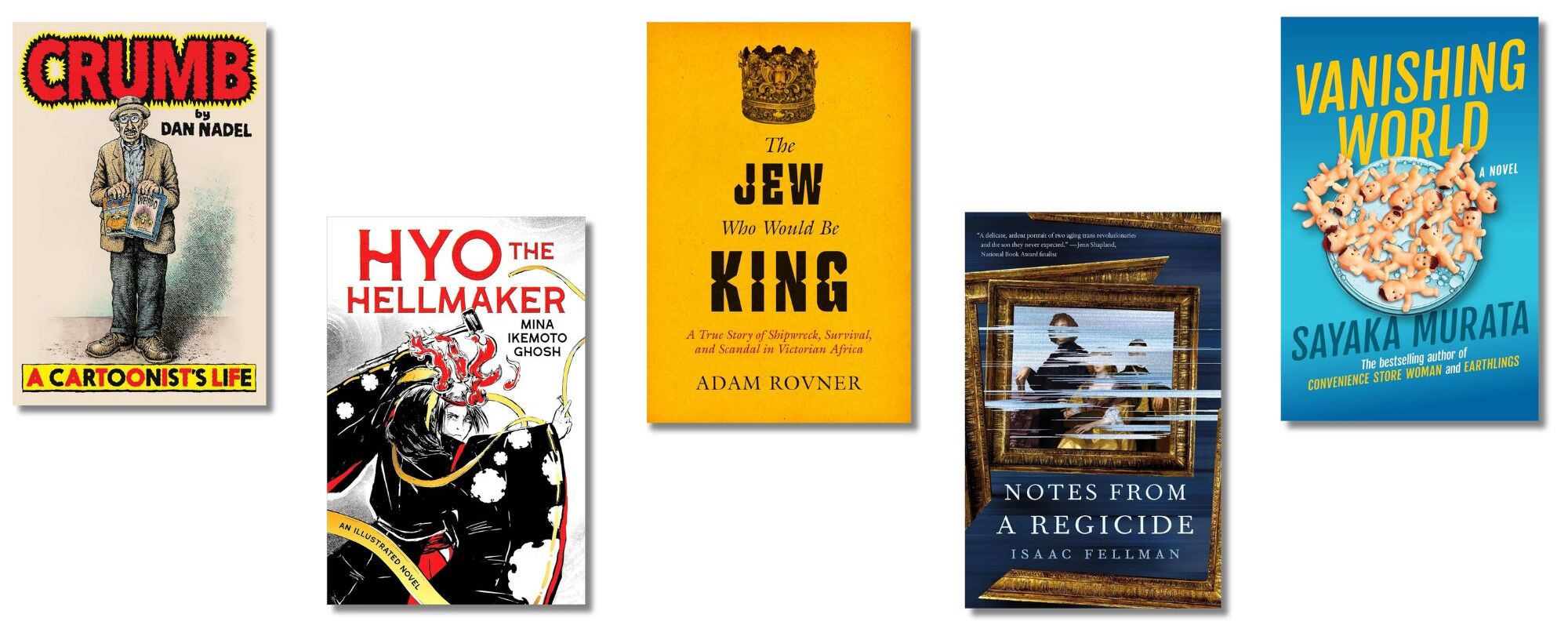
These books confront readers with the recent past and distant future, bring them to southeastern Africa and an alternative Japan, and bedeck their pages with subversive cartoons and lush landscapes.
Go to Source
Author: Colin Dwyer
Go to Source
Author: Sarah Manguso, Liana Finck

President Trump wants European countries to start buying U.S. chicken and eggs. But the U.K. and E.U. think American poultry is gross and chemically washed. Turns out, chlorine isn’t really the issue.
(Image credit: Krug Studios/Corbis RF Stills)
Go to Source
Author: Will Stone